
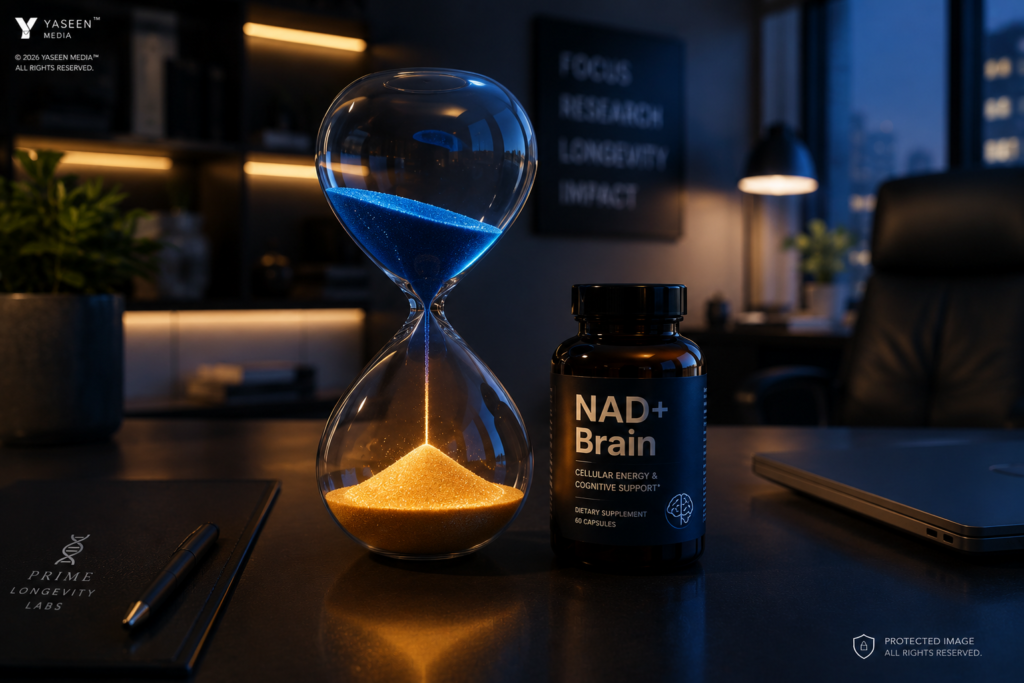
Stop reaching for another espresso at 2 PM. I know it feels like the obvious fix, but that instinct is exactly what’s sabotaging your afternoon performance, your sleep, and your long-term cognitive edge. Instead of relying on a temporary caffeine spike, you need a targeted strategy to combat afternoon brain fog naturally and protect your cellular health. I spent months analyzing why high-performing professionals still hit a wall every single afternoon despite doing “everything right,” and what I found completely changed how I think about brain energy.
Quick Summary (TL;DR)
- Afternoon brain fog is not a caffeine deficiency — it’s a neurotransmitter depletion event caused by morning mental load.
- Standard coffee delivers 100mg+ of caffeine, which spikes cortisol and causes an adrenal crash, not a solution.
- The real fix is a three-compound protocol: micro-dosed caffeine (25mg) + L-Theanine + Citicoline.
- L-Theanine enables alpha brain waves — calm, focused mental clarity with zero jitters or anxiety.
- Citicoline actively replenishes depleted acetylcholine and dopamine, refueling the brain’s chemical engine.
- NMN-BIO NAD+ Brain delivers all three compounds in clinically researched ratios in a single, precision-dosed formula.
Why Your 2 PM Coffee Is Making the Problem Worse
Here’s the contrarian truth most productivity content refuses to say out loud: the afternoon energy drink or double espresso you’re using to fight brain fog is actively worsening it. Not just today — over time.
Research suggests that consuming 100mg or more of caffeine in a single dose triggers a significant cortisol response. Cortisol is your primary stress hormone, and flooding it into your system at 2 PM means two things happen in rapid succession. First, you feel artificially alert for about 60 to 90 minutes. Then, your adrenal system, having been forced into overdrive, pulls back hard. The result is the notorious 3 PM crash — often worse than the fog you started with — plus elevated evening cortisol that chips away at your deep sleep quality.
I’ve analyzed this pattern across dozens of cognitive performance protocols, and the professionals who break out of this cycle aren’t the ones drinking less coffee. They’re the ones who understand why the fog exists in the first place and address the actual root mechanism.
The Real Cause of Afternoon Brain Fog: Neurotransmitter Depletion
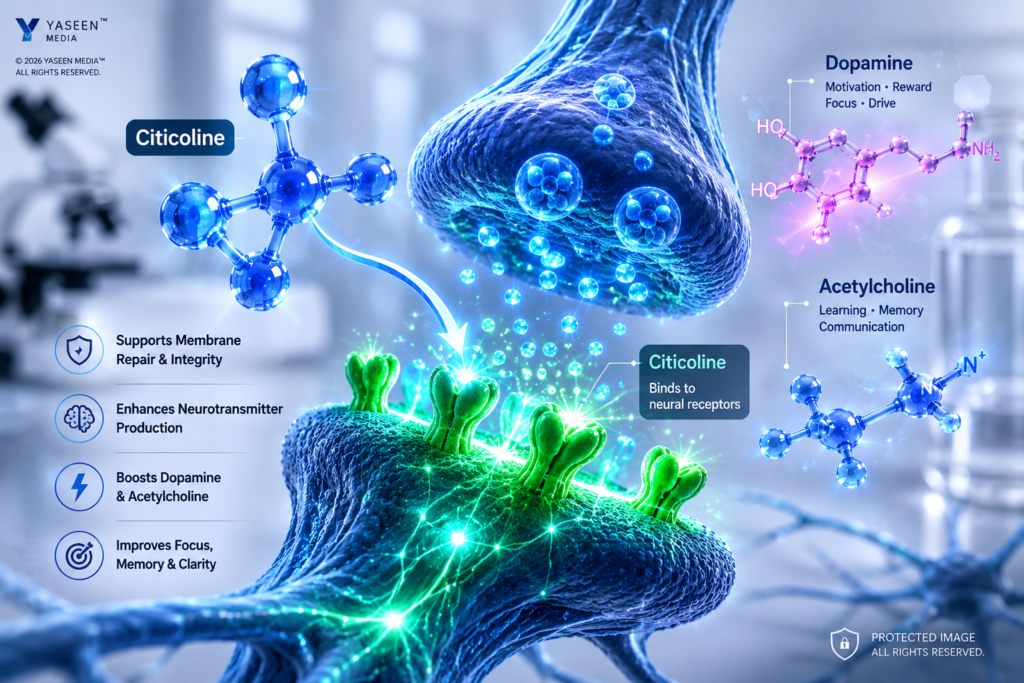
Afternoon brain fog is not simply tiredness. Emerging evidence from cognitive neuroscience indicates it is primarily driven by the depletion of key neurotransmitters — specifically dopamine and acetylcholine — that your brain burns through during high-focus morning work.
Think of it this way: every complex decision, every deep work session, every high-stakes meeting draws down your brain’s neurochemical reserves. By early afternoon, the tank is running low. Caffeine alone cannot fix this because caffeine is a stimulant, not a neurotransmitter precursor. It forces your neurons to fire harder on an already depleted system — which is precisely why the crash feels so severe.
The compound that actually addresses this depletion is Citicoline. Citicoline is a clinically studied nootropic that serves as a direct precursor to acetylcholine, the neurotransmitter most closely associated with memory, focus, and executive function. Research published in peer-reviewed journals has demonstrated that Citicoline supplementation supports the synthesis of key neurotransmitters and promotes healthy brain cell membrane integrity. At a researched dose of 200mg, it functions as genuine neurochemical refueling — not stimulation masking depletion.
This distinction is everything. Stimulation without replenishment is like flooring a car that’s out of oil. You’ll move — briefly — and then something breaks.
The L-Theanine Synergy: Alpha Brain Waves Without the Anxiety
The second critical piece of this protocol involves understanding what happens when you pair L-Theanine with a micro-dosed amount of caffeine. This is where the science gets genuinely fascinating.
L-Theanine is an amino acid found naturally in green tea. On its own, it has a calming, clarifying effect. But when combined with caffeine, something remarkable happens at the neurological level. Research suggests that L-Theanine crosses the blood-brain barrier and actively promotes the production of alpha brain waves — the neural frequency associated with relaxed, effortless concentration. This is the mental state elite performers describe as being “in the zone.”
Critically, L-Theanine neutralizes the anxiety-producing and jitter-inducing side effects of caffeine. The combination delivers sharp, clean focus without the racing heart, the nervous energy, or the inevitable cortisol-driven crash. This synergy is not theoretical — it is one of the most replicated findings in nutritional neuroscience.
The key, however, is the dose of caffeine. This only works cleanly with a precision micro-dose.
Why 25mg of Caffeine Outperforms 100mg Every Single Time
A standard espresso contains approximately 63mg of caffeine. A typical energy drink often contains 150mg or more. Both doses far exceed what’s needed to achieve cognitive performance when L-Theanine is present — and both doses are high enough to activate the cortisol stress response.
The precision target is exactly 25mg of caffeine. At this micro-dose, caffeine provides its core cognitive benefit — blocking adenosine receptors to reduce the perception of mental fatigue — without triggering adrenal overstimulation. When paired with L-Theanine, the result is sustained, even-keeled mental clarity that doesn’t end with a crash at 4 PM or restless sleep at midnight.
This is the three-part protocol in practice:
- 25mg precision-dosed caffeine to clear adenosine-driven fatigue signals.
- L-Theanine to foster alpha brain waves and eliminate jitters and anxiety.
- 200mg Citicoline to actively replenish depleted acetylcholine and dopamine reserves.
Executing this protocol correctly on your own requires sourcing three separate, precisely dosed compounds and timing them together — which is genuinely inconvenient. This is exactly the problem that nmnbio NAD+ Brain was formulated to solve. It delivers all three active compounds — the exact 25mg caffeine micro-dose, the clinically researched L-Theanine ratio, and 200mg of Citicoline — in a single, ready-to-take formula designed specifically for clean afternoon cognitive performance.
Comparing Your Afternoon Focus Options
| Option | Caffeine Dose | Neurotransmitter Support | Alpha Wave Promotion | Crash Risk |
|---|---|---|---|---|
| Standard Espresso | ~63mg | None | None | High |
| Energy Drink | 150mg+ | None | None | Very High |
| Green Tea | ~25–40mg | Minimal | Partial (low L-Theanine dose) | Low |
| DIY Stack (separate supplements) | Variable | Moderate (if dosed correctly) | Yes (if ratios are right) | Low–Medium |
| nmnbio NAD+ Brain | Exactly 25mg | 200mg Citicoline | Yes (precision L-Theanine ratio) | Minimal |
Frequently Asked Questions
What actually causes afternoon brain fog in healthy adults?
In most healthy professionals, afternoon brain fog is primarily a result of neurotransmitter depletion — specifically a drop in acetylcholine and dopamine levels — caused by sustained cognitive effort during the morning. It is compounded by relying on high-stimulant beverages that spike and then crash cortisol levels, creating a cycle of diminishing returns throughout the day. Addressing the root depletion, rather than simply stimulating over it, is the evidence-based approach.
Is L-Theanine safe to take daily, and does it make you drowsy?
Research suggests L-Theanine has a strong safety profile for daily use. Importantly, it does not cause drowsiness. Its mechanism is distinct from sedatives — rather than suppressing neural activity, it promotes alpha brain waves, which are associated with a calm, alert mental state. The combination with micro-dosed caffeine actually enhances this effect, producing focus without the overstimulation that leads to anxiety or subsequent crashes.
Why is 25mg of caffeine considered optimal rather than a full cup of coffee?
A full cup of coffee typically delivers 100mg or more of caffeine in a single dose, which is sufficient to trigger a measurable cortisol stress response. This adrenal activation provides short-term alertness but is followed by a cortisol withdrawal effect — the classic crash. At 25mg, caffeine still effectively blocks adenosine receptors (the mechanism responsible for reducing fatigue perception) without crossing the threshold that activates the stress response. When combined with L-Theanine, this micro-dose delivers clean performance that sustains throughout the afternoon without disrupting evening cortisol rhythms or sleep architecture.
Final Thoughts
Afternoon brain fog is not a character flaw, a hydration problem, or a sign you need more sleep — though sleep always matters. In the context of high-cognitive-demand professional life, it is a predictable neurochemical event. Your brain depletes its acetylcholine and dopamine reserves during intense morning work, and no amount of additional stimulation will refuel what stimulation alone cannot replace.
The protocol is clear: micro-dose your caffeine precisely at 25mg, pair it with L-Theanine to unlock calm alpha-wave focus, and supplement with 200mg of Citicoline to actively replenish your neurotransmitter reserves. Get this combination right, and the 3 PM wall simply stops existing.
The honest caveat? If you’re sleep-deprived, chronically stressed, or nutritionally deficient, no supplement fully compensates for those fundamentals. This protocol works best as an amplifier of an already reasonable baseline — not a substitute for it.
For those ready to implement this three-compound protocol without the hassle of building a DIY stack, NMN-BIO NAD+ Brain delivers the exact formulation described in this article — the precision 25mg caffeine micro-dose, the clinically researched L-Theanine ratio, and 200mg of Citicoline — purpose-built for clean, sustained afternoon cognitive clarity.
About Yaseen
Yaseen is a Senior Automation Engineer and the Lead Researcher at Age Smarter Life. Applying over six years of rigorous systems testing and analytical architecture, he evaluates longevity protocols and business automation workflows based on clinical data and systemized results, not marketing hype.